
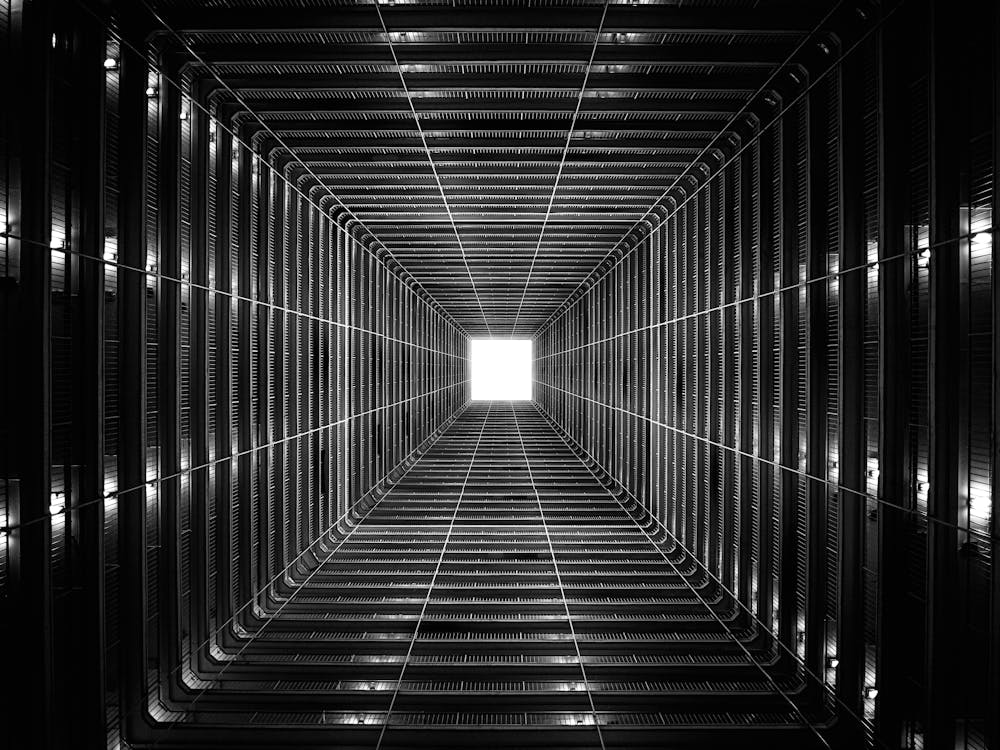
Stare long enough at an optical illusion and you’ll realize something remarkable. Your eyes aren’t lying, but your brain might be. From shifting spirals to disappearing dots, illusions reveal a hidden truth about perception: we don’t see the world as it is, but as our brain interprets it.
Optical illusions expose how the visual system takes shortcuts to process overwhelming amounts of information. Instead of analyzing every detail, the brain fills in gaps using experience, assumptions, and prediction. The result is a constructed version of reality. It’s accurate enough for survival, but full of fascinating quirks.
The Brain’s Guessing Game
Vision begins in the eyes, but sight happens in the brain. The retina captures light and transmits it to the visual cortex, where neurons interpret patterns, depth, and motion. However, the raw data your eyes collect is incomplete. You have blind spots, low lighting, and visual clutter which leaves gaps that your brain must fill.
To make sense of limited information, the brain relies on predictive coding, a process where it constantly guesses what it’s seeing based on context and prior experience. When those guesses are wrong, you experience an illusion.
A classic example is the checker shadow illusion, where two squares of identical color look different because of surrounding context. Your brain interprets the shaded one as lighter, correcting for what it assumes to be shadow. It’s not a failure of vision. It’s an overachievement of pattern recognition.
Why We See What Isn’t There
Illusions like the Kanizsa triangle or the famous “missing dot” grid demonstrate perceptual completion, which describes the brain’s habit of connecting visual fragments into coherent shapes. When lines or patterns are implied but not fully drawn, the brain fills them in automatically.
This tendency evolved for efficiency. In nature, rapid interpretation was vital. Seeing a tiger’s outline in tall grass could mean the difference between survival and danger. Your visual system is designed to favor speed over perfect accuracy, which is why illusions can trick even the sharpest eyes.
Color and motion illusions further reveal how your brain blends input with expectation. For example, the “rotating snakes” illusion appears to move even though it’s static because of slight differences in luminance and the brain’s sensitivity to contrast change. Your brain predicts motion where none exists, proving that perception is as much imagination as observation.
See Why You Always Think You’re Right (and So Does Everyone Else) for how expectations bias perception.
The Role of Memory and Context
Contextual cues shape every visual experience. The same color can look different depending on surrounding hues. This is a phenomenon known as color constancy. Similarly, objects appear larger or smaller depending on depth cues, such as the Ponzo illusion, where converging lines trick the brain into perceiving distance.
Memory also plays a role. The brain stores templates of familiar shapes and uses them to interpret new ones. That’s why you can recognize a face in clouds or see a “man in the moon.” This phenomenon, called pareidolia, shows how the mind’s pattern-seeking nature extends beyond sight. It’s wired for meaning.
Explore How Memory Really Works (and Why It’s So Unreliable) for a deeper dive into sight and memory.
Illusions and the Science of Perception
Far from being mere tricks, optical illusions are valuable tools in neuroscience. They help researchers understand how the brain integrates sensory data, resolves ambiguity, and constructs conscious experience.
Studies using fMRI imaging show that illusions activate higher visual areas associated with interpretation rather than raw sensory input. This confirms that perception is a top-down process. Your brain imposes its model of reality onto what your eyes deliver.
Even the fact that illusions persist after explanation demonstrates how deeply ingrained these predictive processes are. Knowing that two lines are equal in length doesn’t stop you from seeing one as longer. Your visual system operates automatically, independent of logic.
Explore Why Do We Dream About People We Barely Know? for more on the brain’s processes.
Seeing the Truth in Illusion
Optical illusions remind us that perception is subjective. We live not in a direct reflection of the world, but in a simulation crafted by our brains to make sense of it. Most of the time, that system works beautifully, but every illusion is a playful reminder that reality depends on interpretation.
So the next time a picture seems to move or shift before your eyes, remember: you’re not being fooled. You’re catching your brain in the act of making sense of the world.