
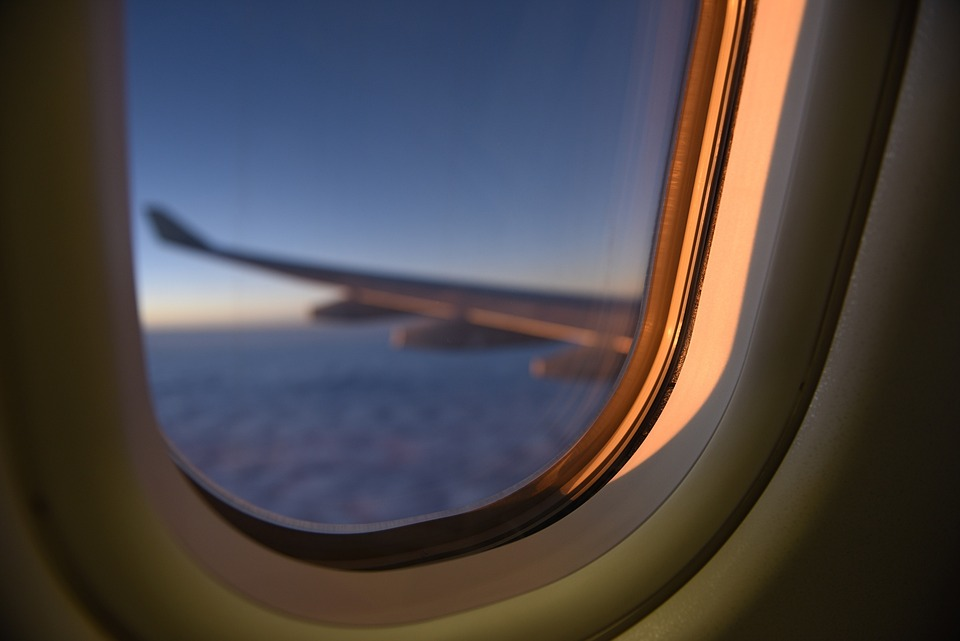
If you’ve ever looked closely at an airplane window mid-flight, you’ve probably noticed a tiny hole near the bottom of the inner pane. It’s easy to overlook. However, that little feature plays a crucial role in keeping passengers safe and comfortable at 35,000 feet. It explains why airplane windows have holes in the first place.
Far from a design flaw, the hole is a small but brilliant piece of engineering that balances pressure, prevents damage, and ensures your window doesn’t fog or crack midair.
Pressurized Cabins and the Layers of the Window
Airplane cabins are pressurized to keep passengers comfortable at cruising altitude, where the outside air pressure is less than one-quarter of what it is at sea level. The difference between interior and exterior pressure puts enormous stress on the fuselage and, by extension, the windows.
Each airplane window actually has three layers of acrylic panes:
- The outer pane, exposed to the outside atmosphere, bears the full pressure difference.
- The middle pane, which contains the tiny hole, serves as a backup in case the outer layer fails.
- The inner pane is mainly for protection. It’s the one passengers can touch and lean against.
These layers work together to distribute stress safely. The small hole, known as a bleed hole or breather hole, allows a controlled amount of pressure to equalize between the cabin and the space between the panes.
Learn Why the Sky Isn’t Actually Blue for sky basics you view through the window.
How the Tiny Hole Balances Pressure
Without the bleed hole, the middle and inner panes would trap air between them. As the plane climbs and cabin pressure adjusts, the trapped air could expand, causing stress that might crack the inner pane.
The hole ensures that the pressure difference acts primarily on the outer pane, which is the one engineered to handle it. This keeps the inner layers stable and prevents them from bearing unnecessary load. It’s a subtle detail that dramatically reduces the risk of window failure.
Preventing Fog and Frost
The bleed hole serves another purpose: moisture control. Air between the panes can hold trace humidity, and temperature differences at high altitude could cause condensation or even frost. The hole allows that air to circulate slightly with the cabin environment, keeping the window clear for passengers to enjoy the view.
This design works in tandem with aircraft climate control systems to maintain consistent temperature and humidity levels. So when you gaze out at clouds or glowing city lights below, you’re seeing through an engineered microclimate, and one that keeps frost from forming between the panes.
Check out Why Certain Sounds Give You Chills to learn how sound triggers body responses.
Safety Through Redundancy
Every feature in commercial aviation is built with redundancy in mind. That is, multiple systems backing one another up. Airplane windows are no exception. If the outer pane were to crack or fail (a rare event), the middle pane would automatically take over, ensuring cabin pressure remains stable.
Because the bleed hole connects the air between the inner and middle layers to cabin pressure, even in such an event, the integrity of the aircraft’s pressurization would remain secure. It’s a quiet but vital layer of defense built into every passenger window.
Explore Why GPS Gets Confused in Cities to compare how environments affect tech and navigation.
Engineering Beauty in the Details
That small, unassuming hole represents the philosophy of aerospace design: safety through simplicity. Each part, no matter how tiny, exists for a reason. It’s a reminder that the most crucial engineering solutions are often invisible to passengers but essential to flight itself.
So next time you fly and notice that little hole, don’t worry. It’s not a defect. It’s a masterpiece of precision engineering, silently keeping your journey smooth, safe, and frost-free.